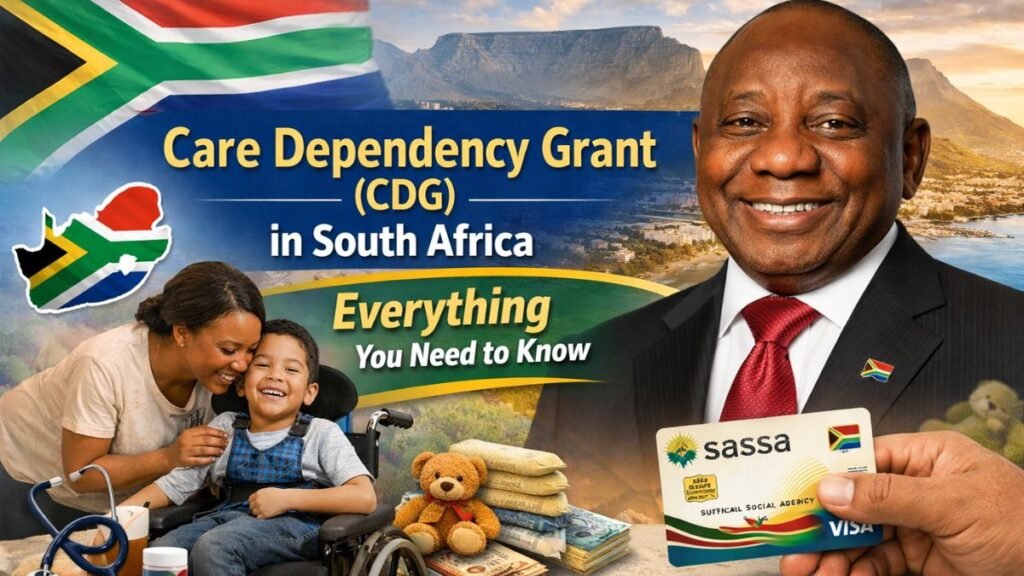
The Care Dependency Grant (CDG) is a vital monthly payment provided by the South African Social Security Agency (SASSA) to support parents, primary caregivers, or foster parents of children with severe physical or mental disabilities who require full-time, specialized home care. This grant helps ensure that caregivers can provide the necessary care and support to children with disabilities.
Payment Amount (As of April 2026)
Following the February 2026 Budget Speech, the South African government announced an increase in the Care Dependency Grant amount, effective from April 2026. The new monthly amount is R2,400, up from the previous amount of R2,320. This increase reflects the government’s commitment to supporting families caring for children with severe disabilities.
Eligibility Requirements for the Care Dependency Grant

To qualify for the CDG, both the child and the caregiver must meet specific criteria outlined by SASSA:
Eligibility for the Child
- Age: The child must be under 18 years old.
- Disability: The child must have a severe disability that is confirmed by a state-appointed medical officer following a functional assessment.
- Care Needs: The child cannot be permanently cared for in a fully state-funded institution, indicating that the child requires home care.
Eligibility for the Caregiver
- Residency: The caregiver must be a South African citizen, permanent resident, or refugee.
- Residency in South Africa: The caregiver must live in South Africa with the child.
- Income Requirements: The caregiver must meet the Means Test, which evaluates the caregiver’s income (this is not applicable to foster parents).
The Means Test (Income Limits)
The Care Dependency Grant is means-tested, meaning that the caregiver’s income is assessed to ensure they need financial support. As of 2026, the income thresholds are as follows:
- Single Caregiver: The caregiver must not earn more than R223,200 per year, which is approximately R18,600 per month.
- Married Caregivers: The combined income of both caregivers must not exceed R446,400 per year, which is approximately R37,200 per month.
If the caregiver’s income exceeds these thresholds, they will not be eligible for the CDG. This ensures that the grant is directed to families who truly need financial assistance.
Required Documents for Application

When applying for the Care Dependency Grant, it’s essential to provide the necessary documents to SASSA to prove eligibility. Here is a list of the required documents:
- Your ID: A 13-digit bar-coded South African ID and the child’s birth certificate.
- Medical Report: A functional assessment from a state doctor confirming the child’s disability.
- Proof of Income: Three months’ worth of bank statements or salary slips for income verification.
- Proof of Marital Status: A marriage certificate or divorce decree, if applicable.
- For Non-Biological Parents: If you are a foster parent or primary caregiver, you will need either a court order (for foster parents) or an affidavit/social worker’s report (for primary caregivers).
Key Conditions & Lapsing of the Care Dependency Grant
Review Process:
SASSA may periodically review the eligibility for the Care Dependency Grant based on the income declared during the application process. Beneficiaries will be notified three months in advance of any upcoming reviews to ensure the continued eligibility of the grant.
Lapsing Conditions:
The Care Dependency Grant will stop if any of the following occurs:
- The child turns 18 years old.
- The child passes away.
- The child is admitted to a state institution for care.

Once the child reaches 18, they may be eligible to apply for the Adult Disability Grant.
Conclusion
The Care Dependency Grant plays a crucial role in providing financial support to families who care for children with severe disabilities in South Africa. With the increase in the grant amount, it offers much-needed assistance to caregivers and ensures that children with disabilities receive the care they require at home.
To qualify for the CDG, caregivers must meet specific eligibility requirements and provide the necessary documents for application. It’s essential for beneficiaries to stay informed about the review process and lapsing conditions to ensure continued support.